
Holiday House or Apartment in the South of France : What to Check Before You Book
Let’s get straight to it. Booking a holiday rental in the South of France can go two ways : you land in a sun-drenched stone house with a fig tree in the garden, or you end up in a studio where the “sea view” means craning your neck off the balcony to spot a sliver of blue between two buildings. The difference almost always comes down to what you checked before you paid. So here’s what actually matters.
First thing I’d say : read the listing like you’re a bit suspicious. Not paranoid, just careful. A good place to compare what real rentals in the region look like is https://www.location-vacances-sud-de-la-france.fr, because seeing a range of properties side by side trains your eye fast. You start noticing which photos are honest and which ones are shot with a very generous wide-angle lens. And trust me, that wide-angle lens has fooled a lot of people.
House or apartment : which one actually suits your trip ?
This is the real question, isn’t it ? And honestly, there’s no universal answer. A house gives you space, often a garden or a private pool, and that lovely feeling of having somewhere to yourselves. Perfect if you’re travelling with kids or a group. The catch ? Houses are usually outside the town centre, so you’ll likely need a car.
An apartment, on the other hand, drops you right in the middle of things. Walk out, grab a coffee, stroll to the market. In a place like Nice or Antibes that’s gold. But you trade away the garden, sometimes the quiet, and very often the parking. Ask yourself one honest question : do you want to be in the town, or do you want to escape it at the end of the day ?
Check the exact location, not just the town name
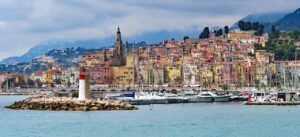
A listing that says “Cannes” can mean a flat fifty metres from the Croisette, or a place twenty minutes inland by car. Both are technically Cannes. Both are very different holidays.
So before booking :
- Look up the address or neighbourhood on a map. If the host is vague about the exact spot, that’s a small red flag.
- Check the real walking distance to the beach. “Close to the sea” is not a measurement.
- If you’ve got no car, look at how far the nearest shop and bus stop actually are.
Perso, I once booked a place described as “a stone’s throw from the village.” The stone, apparently, was thrown by an Olympic athlete. It was a twenty-five minute uphill walk. Lesson learned.
Read the reviews, but read them properly
Five stars across the board is nice, sure. But the useful stuff hides in the detail. Skim the recent ones first, because a place can change hands or slide downhill. And pay attention to how people complain. “A bit noisy at night” from three different guests is a pattern, not bad luck.
What I look for specifically :
- Cleanliness mentioned repeatedly, in a good way.
- How the host reacted when something went wrong. That tells you more than any glowing comment.
- Photos uploaded by guests, not the host. These are the honest ones.
No reviews at all ? It’s not automatically a no. New listings exist. But you’re taking a bigger gamble, and you should price that risk into your decision.
The fees nobody mentions until checkout
This is where the advertised price and the real price part ways. The headline rate looks great, then suddenly there’s a cleaning fee, a service fee, a tourist tax, and a deposit on top. Franchement, it adds up faster than you’d think.
Things to pin down before you commit :
- Cleaning fee: a one-off charge, sometimes 50 to 150 euros depending on the size of the place.
- Tourist tax (taxe de séjour): a small per-person, per-night charge collected by the town. Usually a euro or two a night, nothing dramatic, but it’s there.
- Security deposit: how much, and when do you get it back ?
- Are sheets and towels included, or rented separately ? In a lot of French holiday rentals, they’re extra. People forget that constantly.
Cancellation policy : read it before you fall in love
I know, it’s the boring part. Nobody books a holiday thinking about cancelling it. But plans change, flights get moved, life happens. A flexible policy lets you cancel and get most of your money back up to a few days before. A strict one keeps your cash no matter what.
Just check it. Two minutes now saves a lot of grumbling later. And if you’re booking months ahead, lean towards flexible even if it costs a touch more.
Air conditioning, and why it’s not optional in July

Here’s something people underestimate. The South of France in July and August gets hot. Properly hot, 30 to 35°C is normal, sometimes more. A charming old stone house with thick walls stays cooler, but a top-floor apartment with big windows and no air conditioning? You’ll be lying awake at 2am wondering why you didn’t check.
So if you’re going in summer, look for “climatisation” in the listing. Fans help, but they don’t really cut it during a heatwave. Is it worth paying a bit more for AC? In peak summer, honestly, yes.
Confirm what’s actually in the kitchen and the practical stuff
You’d be surprised how often the basics are missing. A “fully equipped kitchen” can mean two saucepans and a kettle. If you plan to cook, check for an oven, a proper fridge, a coffee machine if that matters to you.
And the rest of the practical checklist :
- Wifi, and whether it’s reliable, not just “available.”
- Parking, especially if you’re driving. In old town centres it’s often the dealbreaker.
- Washing machine if you’re staying more than a few days.
- For a pool : is it private or shared ? Heated or not ? “Pool” can mean a tiny shared one with forty other guests.
Book through a platform that protects you

Last one, and it’s important. Paying a stranger by bank transfer for a place you’ve never seen is how people lose money. If a “host” pushes you off-platform to pay directly, walk away. A proper booking site holds your payment and gives you somewhere to turn if the place doesn’t match the listing.
It’s not about being scared. It’s just about being smart with your money on something that should be the best part of your year.
So, what’s the verdict ?
Pick the type that fits how you actually travel, not the prettiest photo. Check the real location, read the recent reviews, add up the true cost including the fees, and make sure you’ve got AC if you’re going in summer. Do that, and you’ve eliminated about ninety percent of the things that ruin a holiday rental. The other ten percent ? That’s just adventure. Now go find your place.
Related Posts
What to Do in Charente-Maritime in 3 Days: The Complete Itinerary So You Don’t Miss a Thing
So you've got three days and you want to see…